

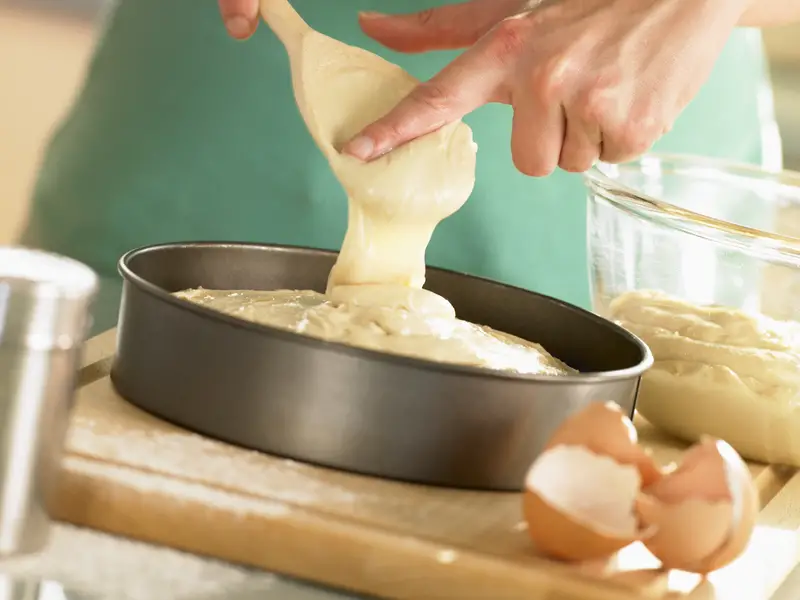
Baking a cake that looks professionally done doesn’t have to mean hours of frustrating frosting work or trimming away half your dessert. There’s actually a super simple towel trick that’ll change everything about how you approach cake baking. And honestly, once you try it, you’ll wonder why nobody told you about it sooner.
Why this towel method works so well
The trick isn’t just one thing—there’s actually two different towel methods that’ll solve your biggest cake problems. The first one uses a damp towel wrapped around your cake pan while it bakes. The second involves a dry paper towel to create beautiful patterns on your frosting. Both are pretty much game-changers, and I mean that. After trying these techniques, my cakes have turned out way more consistent. The damp towel method basically insulates your pan’s sides, which slows down how fast the edges cook compared to the center.
And that makes total sense when you think about the science behind it. The edges of a cake always cook faster because they’re touching the hot pan directly. The center stays cooler longer since it’s insulated by all that surrounding batter. This temperature difference is what causes that annoying dome that basically every home baker deals with.
How to make your own cake strips at home
You can buy commercial cake strips if you want, but honestly, making them yourself is so easy and costs nothing. I’ve done both, and the homemade version works just as well. Start by measuring a paper towel or fabric strip long enough to wrap around your cake pan. For an 8-inch pan, you’ll need about 25 inches. For a 9-inch pan, make it 29 inches. Soak the towel in water, then wring out the excess water. But don’t squeeze it completely dry—you want it damp, not dripping.
Lay it flat and cut aluminum foil about 3 inches longer than your towel. Fold the damp towel lengthwise to match your pan’s depth, which is usually 2 to 3 inches. Place the towel in the center of the foil, then fold the foil around it to create an insulated strip. The foil keeps the moisture locked in while your cake bakes. Wrap this around the outside of your pan and crimp the edges together. That’s it. Super simple.
The paper towel decoration trick changes everything
Now for the decorating method, which I learned about from The Kitchn and it’s become my go-to technique. Once your cake is assembled with a crumb coat and chilled, apply another layer of frosting. Spread it as evenly as you can, though it doesn’t need to be perfect. That’s the beauty of this method—the pattern will hide minor imperfections anyway. Place the cake uncovered in the fridge for 10 to 15 minutes. This lets the frosting dry slightly and develop a delicate crust on the surface.
When you take it out, lay two connected paper towel sheets flat on top of the cake. Make sure the paper towel has a pattern you actually like, because that pattern is going straight onto your frosting. Gently and evenly rub your fingertips over the top to imprint the pattern onto the cake. Work your way around the edge and across the top. If you want, repeat this on the sides too. The last time I did this for my daughter’s birthday cake, it took maybe five minutes total. Way faster than trying to make the frosting perfectly smooth.
Why cakes dome in the first place
Understanding why doming happens makes the towel solution make more sense. As batter heats up, the butter, eggs, and leavening agents release air or carbon dioxide, causing the cake to rise. Once the batter hits between 155 and 180 degrees Fahrenheit, it sets and stops rising. Since cakes cook from the outside in, the batter touching the pan’s sides gets hotter faster than the middle portion. This causes the edges to set before the center does, which creates that dome shape and leaves you with overcooked sides. Does anyone actually like those crusty edges? Not really.
Other factors that cause excessive doming
Sometimes even with the damp towel trick, you’ll still get some doming. But that usually means something else is off. Your oven might be running too hot, which I’ve noticed happens more often than people realize. Make sure you preheat it thoroughly and check if it’s actually the temperature it claims to be. An inexpensive oven thermometer can confirm whether your oven needs recalibrating. Sometimes turning it down just ten degrees does the trick.
The recipe itself could be the problem too. Too many leavening agents like baking powder or baking soda can make the cake rise way too much. Generally, one cup of flour should have roughly one teaspoon of baking powder or a quarter teaspoon of baking soda. If your recipe deviates significantly from this ratio, not only could the cake dome excessively, but it might develop a chemical taste too. At that point, it’s probably time to find a different recipe.
The benefits go beyond just appearance
Even cake layers aren’t just about making your dessert look prettier, though that’s definitely a nice bonus. When your layers are flat, stacking becomes so much easier. You won’t have that anxious moment where the top layer threatens to slide off because it’s sitting on a rounded surface. The frosting distributes more evenly between layers too. And honestly, you end up with more actual cake to eat since you’re not trimming away as much excess. Though I’ll admit, I kind of miss snacking on those trimmed-off scraps. Those were basically the baker’s tax.
For multi-layer cakes especially, having even layers is pretty much essential. The structural integrity improves dramatically. Each layer supports the next one properly instead of creating weak points where doming occurs.
Commercial alternatives worth considering
If you’re not comfortable putting towels in your oven or you want something more permanent, commercial cake strips are an option. Brands like Wilton offer products called Bake-Even Cake Strips for under ten dollars for a two-pack. They’re adjustable to fit different pan shapes and sizes, and they’re heat-safe up to 400 degrees Fahrenheit. I’ve used both homemade and store-bought versions, and there’s really not much difference in the results. The commercial ones are slightly more convenient since they have pins or fasteners built in, but the homemade version from Food Republic works just as well.
Tips for getting the best results
Make sure your towel strips are secure around the pan before putting it in the oven. If they slip down, they won’t insulate the sides properly and you’ll still get doming. The towels should sit snugly against the pan without any gaps. For the paper towel decorating method, don’t skip the chilling step. If your frosting is too soft when you press the paper towel against it, you’ll just end up with a mess. The frosting needs that slight crust to hold the pattern cleanly.
Also, use a light touch when pressing the paper towel onto the frosting. You’re not trying to push it deep into the cake. Just gentle, even pressure across the surface. And pick a paper towel with a pattern you actually like looking at, because that pattern is going to be all over your finished cake. Some patterns are way more attractive than others.
When you might still need to level your cake
Even with the damp towel method, some slight crowning is natural and totally normal. If you’re stacking multiple layers or you’re going for that perfectly professional look, you might still need to do a bit of trimming. To make an accurate cut, place toothpicks around the cake’s circumference as a guide. Use a serrated knife to trim away the excess, keeping your knife level as you cut. Or invest in a commercial cake leveler, which basically guarantees an even cut every time. Though honestly, for most home baking situations, the towel method gets you close enough that major trimming isn’t necessary. It’s more about fine-tuning than removing half the top of your cake.

