

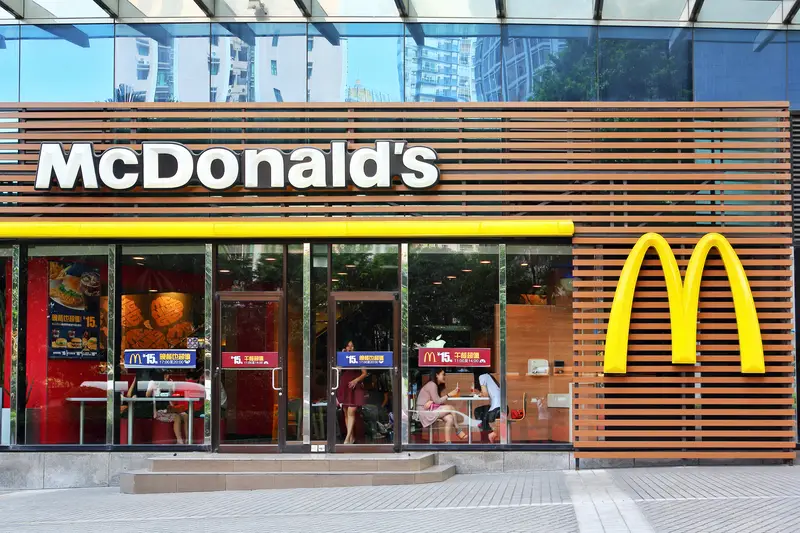
If you’ve paid with cash at McDonald’s recently and felt like something was off about your change, you weren’t imagining things. A leaked internal memo — first spotted on Reddit in late October 2025 — confirmed what some customers had already suspected: McDonald’s is rounding your cash transactions to the nearest nickel. And that’s just the latest in a string of decisions that have customers asking themselves why they’re still showing up.
The Penny Problem That Started It All
On November 12, 2025, the U.S. Mint in Philadelphia pressed its very last penny, ending a 232-year run. The writing had been on the wall for a while — banks couldn’t order fresh pennies and were already rationing what they had left. But the shortage really started biting in late summer 2025 and got worse heading into the holidays.
McDonald’s response? A rounding policy that works like this: If your total ends in 1 or 2 cents, it rounds down. If it ends in 3 or 4 cents, it rounds up. Same logic applies at the 5-cent mark — 6 or 7 cents rounds down, 8 or 9 rounds up. Pay with a card, and you’re charged the exact amount. But if you’re a cash customer, you’re rolling the dice on a couple of pennies every time.
Now, is anyone going broke over two cents? No. But there’s a principle here that rubbed people the wrong way, and fast. The rounding doesn’t always go in the customer’s favor. When other chains like Wendy’s and GoTo Foods (which owns Auntie Anne’s, Cinnabon, Jamba, and Carvel) announced their approach, they said they’d only round in the customer’s favor. McDonald’s didn’t make that same promise.
An Internal Memo That Went Very Public
The whole thing blew up because someone at a Bear Family Restaurants franchise location in Chicago snapped a photo of an internal company memo and posted it to the r/McDonalds and r/mildlyinteresting subreddits on October 25, 2025. That’s how most customers found out — not from McDonald’s corporate, not from a press release, but from Reddit.
McDonald’s confirmed the policy was real after it went viral, calling it “an issue affecting all retailers across the country” and saying they had a team working on “long-term solutions.” But the damage was already done. The optics of a company worth billions quietly pocketing a few extra cents from cash-paying customers — many of whom use cash specifically because they’re on tighter budgets — weren’t great.
To be fair, McDonald’s isn’t alone. One convenience store chain, Sheetz, got so desperate for pennies that it ran a promotion offering a free soda to anyone who brought in 100 pennies. Another unnamed retailer said the shortage would cost them millions because they’d have to round down on every transaction to avoid lawsuits. The National Retail Federation’s Dylan Jeon called the industry-wide penny problem “a chunk of change.”
But the Rounding Isn’t Really Why People Are Mad
Let’s be honest — the penny thing was just the match that lit the fuse. The real anger has been building for years, and it’s about one thing: prices.
McDonald’s corporate says the average price of menu items went up about 40% since 2019. They blame rising labor costs and the price of food and materials. But when you look at individual items, the numbers tell a much uglier story. The McChicken cost $1 in 2018. In 2025, it’s $3.10 — a 210% increase. A Big Mac Meal that was $7.29 in 2019 hit $9.29 by 2024, and some locations have it listed at $10.49 in 2025.
One Reddit user summed it up perfectly: “At that price, you might as well go to Red Robin and tip to have someone bring it to you.” Another wrote, “I don’t get why anyone goes there anymore. Overpriced and terrible.”
Between 2014 and 2024, the average price of fast-food items jumped between 39% and 100%, while overall inflation during that same period was 31%. McDonald’s menu prices for popular items doubled during that stretch. That’s not keeping up with inflation — that’s lapping it.
The $8 Nugget Meal That Backfired
In November 2025, McDonald’s tried to generate some goodwill by promoting a limited-time $8 10-piece Chicken McNugget value meal. They posted about it on X. It did not go the way they planned.
The replies were brutal. Hundreds of complaints piled up about affordability, quality, and long drive-through waits. One commenter wrote: “Since when is $8 a good price for 10 little nuggets, a handful of fries and a drink?” McDonald’s PR team responded to individual complaints asking people to DM their contact info, which felt about as effective as bailing out a sinking ship with a teaspoon.
CEO Chris Kempczinski admitted during the Q3 earnings call that the company heard customers’ affordability concerns “loud and clear.” He also acknowledged earlier in 2025 that combo meals priced over $10 were “negatively shaping value perceptions.” That’s corporate speak for: people think we’re ripping them off and they’re not wrong.
Customers Are Voting With Their Feet
The anger isn’t just online. People are actually staying home. According to Placer.ai data, customer visits to McDonald’s same-store locations dropped 4% in Q3 2025 compared to the year before. Month by month, it looked like this: July was down 1.8%, August dropped 4.4%, and September fell another 4.4%. Foot traffic was last positive in April 2025 — right before most tariffs kicked in and inflation crept back up from 2.3% to 3%.
And it’s not just McDonald’s hurting. Wendy’s foot traffic fell 6.5%, Burger King dropped 3.5%, and Jack in the Box got hammered at negative 7.7% that same quarter. A KPMG survey found that 69% of American consumers are eating at home more often, with 85% saying it’s to save money. A full 34% said they’re specifically eating less at fast-food restaurants.
Low-income consumers — the exact customers McDonald’s was built to serve — declined their visits by nearly double digits in Q1 2025. Middle-income traffic fell by almost the same amount.
The Boycott That Made Headlines
In June 2025, a grassroots group called The People’s Union USA organized a week-long “economic blackout” boycott of McDonald’s, running from June 24 through June 30. The group’s leader, John Schwarz, accused McDonald’s of benefiting from offshore tax havens, price gouging, anti-union tactics, and exploiting global supply chains.
The timing made things worse because McDonald’s had just announced in January 2025 that it was rolling back some of its diversity, equity, and inclusion commitments. The company stopped requiring suppliers to meet certain DEI targets, pulled out of external diversity surveys, and renamed its diversity team the “Global Inclusion Team.” On the same day the boycott launched, over 40 Black ex-franchisees filed a lawsuit claiming systemic racial discrimination.
McDonald’s pushed back, saying the boycott relied on “misleading claims” and that its “commitment to inclusion remains steadfast.” But the DEI pullback had already drawn attention from both sides of the political aisle — anti-woke activist Robby Starbuck took credit for pressuring the company into the changes, while progressive groups saw it as a betrayal.
McDonald’s Is Now Cracking Down on Its Own Franchisees
Here’s where things get interesting. Starting January 1, 2026, McDonald’s is rolling out enhanced franchising standards that will let corporate “holistically assess” whether franchise owners are offering good enough value to customers. In a memo from Andrew Gregory, McDonald’s senior vice president of global franchising, the company made it clear: if your prices are out of line, there will be consequences.
Those consequences could include not being allowed to open new locations or, in extreme cases, losing the franchise entirely. That’s a big deal when you consider that franchisees run about 95% of McDonald’s restaurants worldwide and have traditionally set their own prices.
U.S. President Joe Erlinger already told franchise owners they needed to “stay the course” on value offerings. The company had been pushing $5 Meal Deals, Extra Value Meals, and a “Buy One, Add One for $1” promotion. The Snack Wraps relaunch in July 2025 at $2.99 was called “the most popular new chicken product launch in the U.S. in recent history,” with nearly 1 in 5 customers buying one.
But even with these efforts, the numbers tell the story. Global same-store sales grew 3.6% in Q3, but that was driven by higher prices, not more customers walking through the door. When the people showing up are spending more per visit but there are fewer of them, that’s not a comeback — that’s a warning sign.
The Bigger Picture
McDonald’s isn’t in crisis. It still has over 43,000 locations worldwide, $25.9 billion in annual revenue, and 185 million active loyalty program users across 60 markets. But the brand has a trust problem that no app deal or rounding policy disclaimer can fix.
The company that built its empire on being the affordable option is now the place where a six-piece McNuggets, a small Sprite, and small fries costs about $8. People notice that. They remember when it didn’t. And when you tell them it’s because wages and beef prices went up — beef rose 12% from June 2024 to June 2025, reaching $6.12 per pound — they look at your $26 billion in revenue and shrug.
The penny rounding was a small thing. But small things add up when trust is already thin. And right now, a lot of McDonald’s customers don’t feel like the company is on their side anymore. Whether that changes depends less on memos and more on what it actually costs to eat lunch there next year.

