

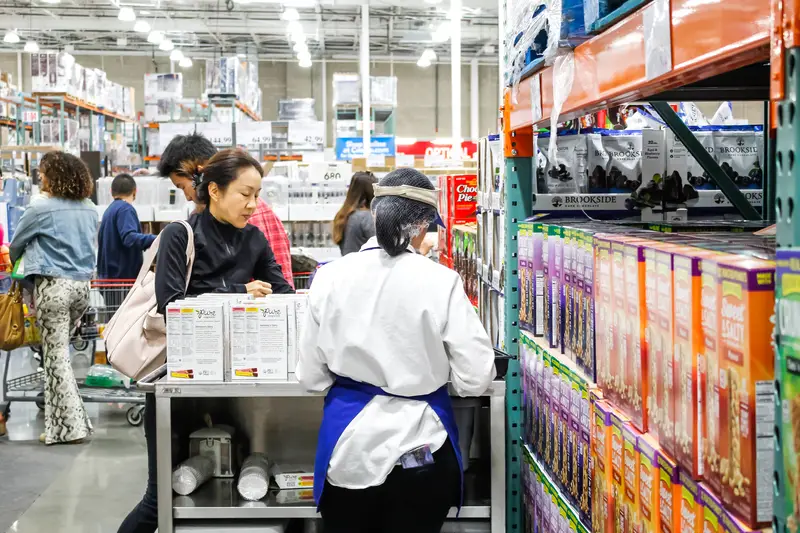
Anyone who’s shopped at Costco knows the drill. You walk in for toilet paper and suddenly you’re sampling cheese cubes and kombucha. Those free samples aren’t just a nice perk – they’re basically a carefully orchestrated sales machine that’s been working for decades.
The psychology behind those tiny cups
Free samples work because they mess with your brain in pretty clever ways. When someone hands you something for free, you feel obligated to reciprocate. It’s human nature, honestly. And studies show that 86% of shoppers are more likely to buy something after trying a free sample.
But here’s what makes it super effective – they’re not just targeting your taste buds. They’re creating what marketing experts call “in-store gustatory experiences.” Basically, they’re turning shopping into entertainment. Every time I’ve walked through those sample stations, I notice how the experience feels different from regular grocery shopping.
Sales numbers don’t lie
The results are pretty incredible when you look at the actual data. Some sampling programs can boost sales by up to 2000%. That’s not a typo – two thousand percent. I mean, even if Costco’s numbers aren’t quite that high, they’re definitely seeing massive returns on their sample investment.
Think about it this way – if millions of people shop at Costco every day, and 86% of them buy at least one item they sampled, that adds up to serious money. Way more than the cost of giving away tiny portions of food.
Strategic product selection matters
Costco doesn’t just randomly pick products for sampling. They’re totally strategic about it. New products that need exposure get sampled. Overstocked items that aren’t moving fast enough get sampled. Products that complement other items get sampled too.
That cheese and crackers combo you tried last week? The sample person probably suggested you grab the crackers and salami to go with it. One sample turns into three purchases. It’s genius, really. After trying these combo samples myself, I’ve definitely walked away with more items than I planned.
Timing your sample strategy
Want to maximize your free sample haul? There’s actually a science to when you should shop. According to Costco employees on Reddit, weekdays between 1-4 PM give you the best sample selection. That’s when both shifts overlap, so more stations are running.
Weekend shoppers should aim for 11:30 AM to 3:30 PM. But honestly, every store is different. Some locations wrap up samples at 4 PM sharp, others keep going until 6:30 PM. Why doesn’t Costco just standardize this? Nobody knows.
Who actually runs the sample program
Here’s something most shoppers don’t realize – those friendly people handing out samples aren’t actually Costco employees. They work for Club Demonstration Services (CDS), a third-party company. This setup keeps costs down for Costco since CDS workers typically earn less and get fewer benefits than regular Costco staff.
And there’s no official limit on how many samples you can take. The last time I asked about seconds, the CDS worker just smiled and handed me another cup. Some people feel awkward about going back for more, but the staff can’t really enforce any limits anyway.
Best times of year for samples
Smart shoppers know that sample variety peaks at certain times. The beginning of each monthly coupon book period brings more samples since manufacturers want to push their discounted products. Holiday shopping seasons are also prime time – that’s when companies really want their products moving off shelves.
Don’t skip the frozen and beverage sections either. I’ve noticed these areas often have samples that other shoppers miss because they’re focused on the main food aisles. Sort of defeats the purpose if you’re not covering the whole store, right?
The psychology of obligation
There’s something weirdly powerful about accepting free food from a real person. It creates a sense of social obligation that automated dispensers just can’t match. When someone smiles and hands you a sample, walking away empty-handed feels kind of rude. Even though you shouldn’t feel pressured to buy anything, most people do anyway.
This personal interaction is exactly why Costco’s strategy works so well compared to other retailers who use impersonal sample setups. The human element makes all the difference in closing sales. After trying samples from the same CDS worker multiple times, you start to feel like you know them.
Why other stores can’t copy this
Other grocery chains have tried similar sample programs, but they never quite match Costco’s success. Part of it comes down to scale – Costco’s membership model and bulk purchasing power make the economics work better. Plus, their warehouse layout creates natural traffic patterns that funnel shoppers past sample stations.
Regular supermarkets with narrow aisles can’t accommodate the same setup without creating chaos. And their profit margins are already tighter, so giving away free product hits harder. Costco can absorb those costs because they make money on membership fees and bulk sales.
Making samples work for your budget
Smart shoppers can use Costco’s sample strategy to their advantage without breaking their budget. Try before you buy, especially for expensive or unfamiliar products. But don’t feel obligated to purchase everything you sample – that’s exactly what they’re counting on.
Set a firm shopping list before you go and stick to it. Samples should help you make better decisions about products you were already considering, not add impulse purchases. Though let’s be honest, we’ve all walked out with at least a few things we discovered through sampling. At least the samples help ensure you’ll actually like what you’re buying in bulk quantities.

