
You grab a box of Cheerios because the tag says it’s on sale. You toss some salmon in the cart — marked down this week. You’re feeling pretty good about your grocery haul. Then you get home, glance at the receipt, and realize you paid full price for half the stuff you thought was discounted. Sound familiar? If you shop at Kroger or any of its owned chains, there’s a real chance this has happened to you — probably more than once.
A months-long investigation by Consumer Reports, The Guardian, and the Food & Environment Reporting Network found that Kroger stores across the country have been systematically overcharging customers by leaving expired sale tags on shelves while the registers ring up the regular, higher price. It’s not a glitch here or there. It’s a pattern — and it’s costing American shoppers real money.
The Numbers Are Worse Than You’d Think
Here’s what the investigation found: shoppers visiting 26 Kroger-owned stores in 14 states and Washington, D.C. were overcharged an average of $1.70 per sale item. That comes out to an 18.4% markup over the advertised sale price. Think about how many sale items you buy in a single grocery trip. Now multiply that $1.70 by each one. It adds up fast.
Investigators found expired sale labels on more than 150 different grocery items — everything from boneless beef and salmon to Mucinex, Nescafé instant coffee, juice, vegetables, and dog food. A third of those expired tags were at least 10 days out of date. Five of the products had tags that were expired by 90 days or more. Three months. That’s not a mistake someone made yesterday. That’s a tag nobody bothered to take down for an entire season.
An internal review of just one Kroger store revealed that nearly 6% of items had incorrect tags leading to overcharges. State regulators consider 2% the maximum acceptable error rate. Kroger was running at three times that limit.
Workers Say They Can’t Keep Up
The investigation didn’t start with reporters — it started with employees. Workers at Kroger-owned King Soopers stores in Colorado, currently in union negotiations, alleged widespread price-label problems. They said staffing cuts and reduced hours have made it basically impossible to keep every tag current. Some stores have as many as 15,000 discount tags hanging at any given time. That’s a massive amount of paper to swap out every time a sale ends.
And the staffing data backs this up. According to OSHA data cited in the report, Kroger-owned stores where investigators found the most tag errors had cut their workforce by an average of 10.3% between 2019 and 2024. Average hours worked dropped by 9.9%. In stores with fewer or no pricing errors, the cuts were smaller — 6.2% fewer employees and a 9.3% drop in hours.
Joy Alexander, an employee at a King Soopers store, told The Guardian that the overcharges hit her hardest emotionally when she thought about the older shoppers on fixed incomes: “They think that when they took it off the shelf, it was $2.50. They don’t know that they’re paying $3.75 for that one item.”
A Kroger company rep disputed that labor hours have been reduced. But the data says otherwise.
It Didn’t Stop After They Got Caught
Here’s the part that should really bother you. After the initial reporting raised alarms, Kroger promised to make sure employees followed proper procedures. So a reporter went to check. They visited a store in Belpre, Ohio — after the company had already committed to fixing things — and found 11 expired tags resulting in about $5 in price discrepancies. In a single store. On a single visit. After they said they’d fix it.
In Colorado, where Kroger operates King Soopers stores in 36 cities, state regulators ran price-check tests — and the chain failed twice since January 2025. In Ohio, Kroger’s home state, the attorney general’s office has received nearly 60 complaints about overcharge and price tag issues since 2021. Michigan’s attorney general has gotten 229 consumer complaints about Kroger since 2020.
Class-action lawsuits alleging pricing errors have been filed against Kroger by customers in California, Illinois, Ohio, and Utah. And the day after the Consumer Reports investigation published on May 14, 2025, Kroger announced it would be hiring 15,000 additional employees across the country. Coincidental timing, right?
This Isn’t Just a Kroger Problem
Kroger is getting the spotlight right now, but they are not the only grocery chain that’s been caught doing this. Scanner errors across all retailers cost American consumers an estimated $1 billion to $2.5 billion every year. New York City once inspected close to a thousand supermarkets and more than half failed inspection.
Walmart has its own history here. In 2022, a shopper sued Walmart claiming he was overcharged by as much as 15% on six different items. Walmart also agreed to a $45 million settlement in a class-action lawsuit accusing it of falsely inflating the weight of certain grocery items — bagged oranges, grapefruit, tangerines, and sold-by-weight clearance products. Most people who filed claims got about $10 back.
Separately, Walmart was ordered to pay $5.6 million to settle a consumer protection dispute in California over selling products weighing less than what was labeled. Investigations confirmed that 164 Walmart stores across 30 counties had been making scanning errors going back to 2005.
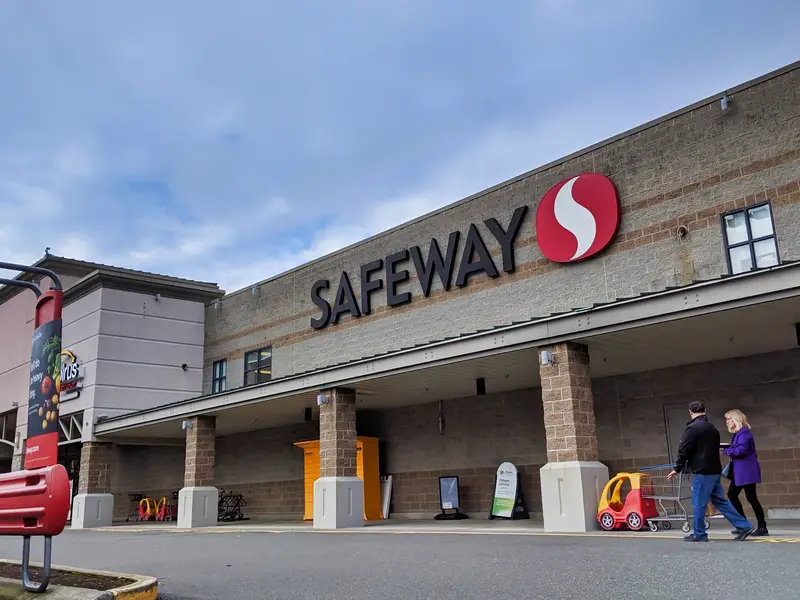
Then there’s Albertsons. In 2024, the company paid almost $400 million to settle a lawsuit accusing it of overcharging customers at hundreds of Albertsons, Safeway, and Vons supermarkets across California. The allegations? False advertising and unfair competition for charging more than the lowest advertised price.
Some Chains Charge More Based on Where You Live
Overcharging at the register is one thing. But what about overcharging by ZIP code?
The New England Consumer Alliance released a report called “The Hannaford Poverty Tax” targeting the Hannaford grocery chain, which was founded in Maine 143 years ago and came under European ownership when Delhaize bought it in 2000. The report found that stores in lower-income communities were charging higher everyday prices than stores in wealthier areas. The poverty rates in towns like Falmouth and Scarborough, Maine are under 2%, with a median household income above $125,000. Shoppers in those neighborhoods were actually paying less for their groceries — and Scarborough happens to be home to Hannaford’s headquarters.
It gets worse. Not only were everyday prices higher in the lower-income stores, but the promotions were weaker too. The report found examples where regular prices for certain items were the same at all locations, but the higher-income stores got far deeper discounts when those items went on sale. The families who could least afford to absorb higher costs were the ones paying the most. Corporate leadership, meanwhile, was shopping at discounted prices in its own backyard.
A Senator Got Involved
The Kroger investigation drew enough attention that U.S. Senator Ruben Gallego of Arizona sent a formal letter to Kroger’s interim CEO, Ronald Sargent. He urged the company to take concrete steps to prevent price tag errors and to reimburse customers who had been overcharged. This matters because Kroger owns and operates 130 Fry’s grocery stores in 34 Arizona cities — so for many of Gallego’s constituents, Kroger isn’t some distant corporation. It’s where they buy their food every week.
Kroger, for its part, has denied the allegations. The company said in a statement that “the characterization of widespread pricing concerns is patently false.” They also mentioned they’re testing digital price tags in some stores, which could fix pricing issues by updating tags electronically instead of relying on overworked employees to swap out paper signs. Whether that actually rolls out at scale remains to be seen.
How to Protect Yourself
You probably don’t check your receipt item by item. Almost nobody does. But maybe you should start — at least occasionally. One shopper profiled in consumer reporting found she was being overcharged three separate times during a single weekly grocery run. When she started paying attention, she recovered $8 in a single trip. If that pattern held every week, that’s $416 a year just walking out the door.
Self-checkout, love it or hate it, actually gives you an advantage here. You can watch each item scan in real time and catch discrepancies before you pay. Store apps — like those from Kroger or Sam’s Club — can also help you verify prices as you shop. Take a photo of the shelf tag before you put something in the cart. If the price rings up differently at checkout, you have proof.
And don’t be afraid to say something at the register. Most stores have policies that require them to honor the shelf price if there’s a discrepancy. Some will even give you the item for free if the error is under a certain dollar amount. But they won’t do any of that if you don’t catch the problem first.
Kroger reported $3.8 billion in operating profit last year. They’re not hurting for money. The question is whether they’re willing to spend some of it making sure the price you see is the price you pay. So far, the answer has been pretty disappointing.

