

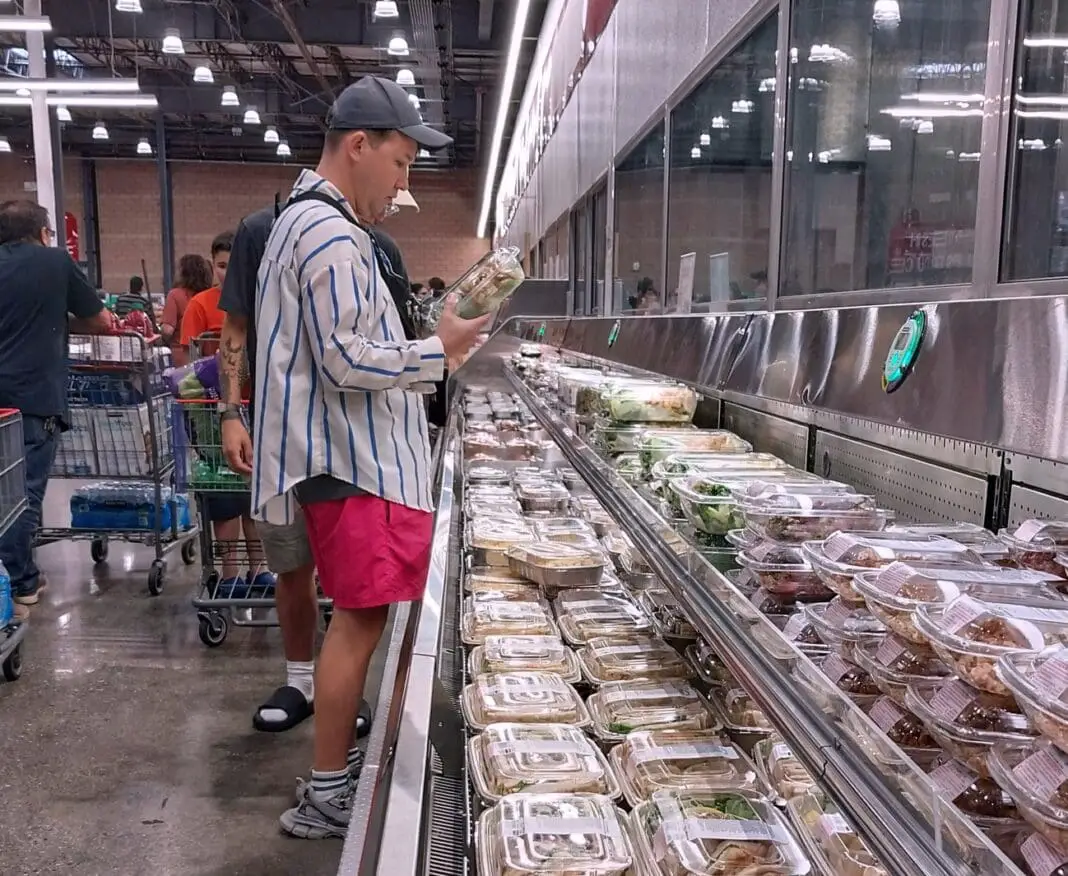
If you recently grabbed one of those convenient meatloaf meal kits from the prepared foods section at Costco, you need to check your fridge right now. The retailer just pulled its Meatloaf with Mashed Yukon Potatoes and Glaze from shelves across more than half the country after learning that one of the ingredients might be contaminated with salmonella. No one has gotten sick yet — at least not officially — but the warning is serious enough that Costco is telling customers to throw the meal away or bring it back for a full refund.
Here’s everything you need to know about the recall, what salmonella actually does to your body, and why this kind of thing keeps happening with ready-to-eat meals.
What Exactly Got Recalled
The recalled product is Costco’s Meatloaf with Mashed Yukon Potatoes and Glaze, item number 30783. It’s one of those refrigerated, ready-to-eat trays you find near the rotisserie chickens and pre-made salads. Think comfort food in a plastic container — meatloaf, creamy mashed potatoes, and a glaze, all packaged up and ready to heat.
The affected kits were sold between March 2 and March 13, 2026, and carry sell-by dates from March 5 through March 16, 2026. The sell-by date is printed on the label right below the item name and above the ingredient list, formatted as DD/MM/YYYY. If you’ve got one in your fridge that matches those dates, don’t eat it. Period.
Which States Are Affected
This isn’t a small, regional thing. The recall covers Costco warehouse locations in 26 states, plus Washington, D.C. and Puerto Rico. That’s a huge footprint. The full list includes Alabama, Arizona, California, Colorado, Delaware, Florida, Georgia, Hawaii, Illinois, Indiana, Iowa, Kentucky, Maryland, Michigan, Mississippi, Missouri, Nevada, New Mexico, North Carolina, Ohio, Pennsylvania, South Carolina, Tennessee, Utah, Virginia, and Wisconsin.
If you live in any of those states and shop at Costco, it’s worth checking your recent purchases. Even if you already ate one and feel fine, it’s good to know what to watch for — more on that in a minute.
The Ingredient Supplier Behind the Recall
Costco didn’t actually find the contamination itself. The recall was triggered by a supplier called Griffith Foods Inc., a family-owned food ingredient company headquartered in Alsip, Illinois, just outside Chicago. Griffith Foods has been around since 1919 — over a hundred years — and operates in more than 30 countries. They make seasonings, sauces, gravies, flavors, and various food safety ingredients for companies worldwide.
Griffith Foods notified Costco that one of the ingredients it supplied for the meatloaf had the potential to be contaminated with salmonella. Neither Costco nor Griffith Foods has said publicly which specific ingredient is the problem. Was it a seasoning blend? A sauce component? The glaze? Nobody’s talking. Griffith Foods didn’t respond to press inquiries, and Costco’s recall notice kept things vague on purpose. That lack of detail is frustrating for consumers who want to understand exactly what went wrong.
What Salmonella Actually Does to You
Salmonella gets thrown around in food recall headlines so often that it can start to feel like background noise. But it’s not something to shrug off. According to the Centers for Disease Control and Prevention, salmonella causes about 1.35 million infections in the United States every year. Of those, around 26,500 people end up in the hospital, and roughly 420 people die. Every year.
If you get infected, the symptoms usually show up between six hours and six days after you eat the contaminated food. We’re talking diarrhea, fever, stomach cramps, nausea, vomiting, headache, and loss of appetite. Most healthy adults will feel terrible for four to seven days and then recover without needing medical treatment. But for young kids, people over 65, and anyone with a weakened immune system, the infection can turn dangerous fast. Hospitalization isn’t uncommon in those groups, and in rare cases, the infection can be fatal.
Here’s the kicker that a lot of people don’t realize: the CDC estimates that only 1 in every 30 salmonella infections actually gets diagnosed. Most people who get food poisoning never go to a doctor or have a lab test done. They just suffer through it at home and assume they ate something bad. So the true number of people getting sick from salmonella is way higher than what gets reported.
No Illnesses Reported — But That Doesn’t Mean Much
Costco’s recall notice says that no illnesses or injuries have been reported in connection with the recalled meatloaf. That sounds reassuring, and it is — to a point. But there are a couple of reasons not to take too much comfort in that statement.
First, the timeline is tight. The product was only sold over an 11-day window, and salmonella symptoms can take up to six days to appear. People who ate the meatloaf might not have connected their stomach issues to a grocery store meal kit, especially if they didn’t hear about the recall right away. Second, as the CDC data shows, most salmonella cases go undiagnosed. Someone could have spent a miserable weekend in the bathroom and chalked it up to a stomach bug without ever realizing the meatloaf was the culprit.
What to Do if You Bought the Meatloaf
The instructions from Costco are straightforward. If you have item number 30783, Meatloaf with Mashed Yukon Potatoes and Glaze, with a sell-by date between March 5 and March 16, 2026, do not eat it. Don’t eat the meatloaf, don’t eat the potatoes, don’t eat the glaze. Toss the whole thing or return it to your local Costco for a full refund.
If you already ate it and you’re feeling fine, you’re probably in the clear, but keep an eye out for symptoms over the next several days. If you develop diarrhea, fever, or severe stomach cramps, call your doctor and mention the recall. If you’re in one of those higher-risk groups — very young, elderly, or immunocompromised — it’s extra important to seek medical attention quickly if symptoms pop up.
Costco’s Track Record With Recalls
This isn’t Costco’s first rodeo with food recalls, and it won’t be the last. The retailer has dealt with several high-profile incidents in recent years. In 2024, Costco recalled over 10,000 packages of Kirkland Signature organic eggs from 25 stores because of potential salmonella contamination — same bacteria, different product. And in another memorable incident, Costco had to pull Kirkland prosecco off shelves because the bottles were literally exploding. Not a food safety issue in the traditional sense, but definitely not something you want happening in your refrigerator.
Food recalls tied to salmonella are actually pretty common across the entire food industry. When a supplier discovers contamination in a raw or processed ingredient, the ripple effect can hit multiple products at multiple retailers. In this case, the contamination traced back to Griffith Foods, and the problem ingredient made its way into Costco’s prepared meatloaf. It’s a reminder that even when you’re buying from a trusted retailer, the supply chain behind that product involves multiple companies, and a problem at any point along the way can end up on your dinner plate.
Why Ready-to-Eat Meals Carry Extra Risk
There’s an important distinction between a recall on raw chicken and a recall on a ready-to-eat meal. When you buy raw chicken, you’re expected to cook it to an internal temperature of 165°F, which kills salmonella. You have a built-in safety step. But with a prepared meal from the deli or refrigerated section, many people assume the food is already safe to eat as-is or that a quick reheat is enough.
The convenience that makes these products so popular — tear it open, heat it up, eat — is the same thing that makes a contamination scare more dangerous. If salmonella is present in a seasoning or sauce component that sits on top of or mixed into the food, reheating in the microwave might not bring every part of the meal to a high enough temperature to kill the bacteria evenly. It’s not the same as roasting a chicken in the oven where the whole thing gets thoroughly cooked.
The Bigger Salmonella Problem in America
This Costco recall is just one small piece of a much larger problem. Salmonella infection rates in the United States have barely budged in over 20 years. The USDA’s own data shows that while salmonella contamination on poultry has been declining, that hasn’t translated into fewer people getting sick. The country set a goal of reducing salmonella illnesses by 25 percent, and we haven’t gotten any closer to hitting it.
Scientists have identified more than 2,500 types of salmonella, though fewer than 100 types cause most human illness. The bacteria spread through contaminated food and water, and also through contact with animals and their feces. Ground beef, poultry, eggs, and produce are common culprits, but as this recall shows, it can show up in processed food ingredients too — the kind of stuff that ends up in products you’d never suspect.
Over 23 percent of foodborne salmonella cases in the U.S. are linked to chicken and turkey alone. But the ingredient supply chain — the companies making the seasonings, sauces, coatings, and flavor blends that go into thousands of products — is another vector that doesn’t always get the same attention.
How to Stay on Top of Recalls
Costco does a reasonable job of notifying members about recalls. If you bought the affected product and Costco has your purchase history linked to your membership card, there’s a good chance you received an email or a letter about the recall. But not everyone checks their email regularly, and not every purchase gets tracked perfectly.
Your best bet is to make a habit of glancing at the USDA and FDA recall pages once a week, or signing up for recall alerts. You can also follow food safety accounts on social media that flag recalls quickly. It takes 30 seconds, and it could save you from a very unpleasant week on the couch.
In the meantime, if you have that Costco meatloaf sitting in your fridge, do yourself a favor and get rid of it. A refund and a different dinner plan is a much better outcome than a bout with salmonella.

