


I’ll be honest: I avoided making risotto at home for years. It seemed like one of those dishes that existed purely to stress people out on cooking competition shows. All that stirring, the precise timing, the way every chef on TV acts like you’ve committed a war crime if the rice is even slightly overcooked. So I stuck with pasta and moved on with my life.
Then I made this chicken risotto — the version with white miso paste stirred in — and something clicked. Not just the technique, which turned out to be far more forgiving than I expected, but the flavor. Miso in risotto sounds like a weird move until you taste it. Then it sounds like the most obvious idea anyone’s ever had. The deep, salty, almost meaty richness it adds is the kind of thing that makes people put their fork down and ask what’s different about this.
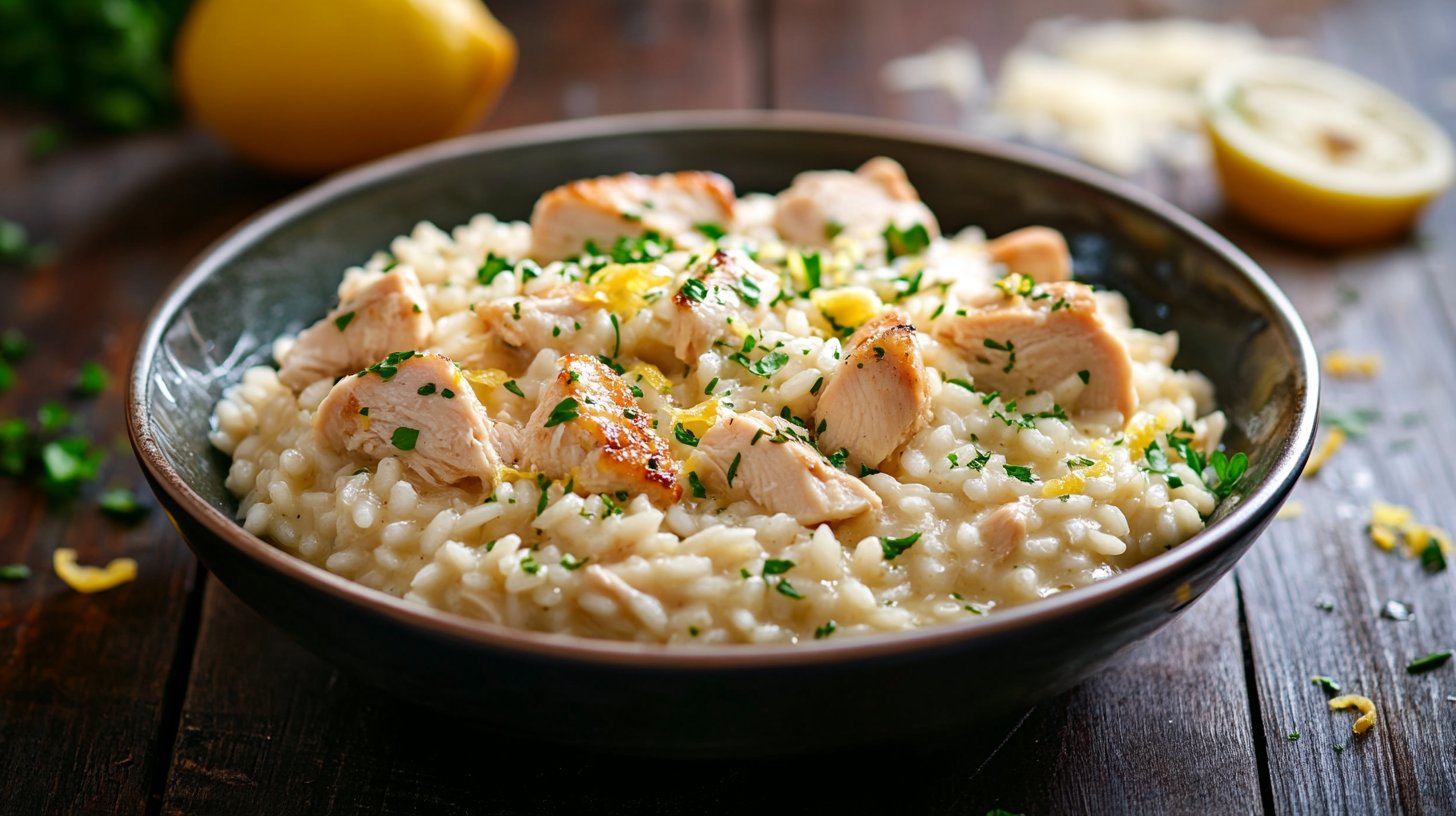
This recipe is built around boneless, skinless chicken thighs, Arborio rice, dry white wine, lemon, Parmesan, and a couple tablespoons of white miso paste. It takes about 45 minutes, one pot does most of the work, and the result is creamy, bright, and deeply savory in a way that regular chicken risotto just isn’t.
Why Miso Changes Everything
White miso paste — the mild, slightly sweet kind you can find at pretty much any grocery store these days, usually near the tofu or in the international aisle — is packed with umami. That’s the savory, almost hard-to-describe depth you taste in things like soy sauce, Parmesan, and good mushroom soup. When you stir a couple of tablespoons of it into your rice right at the toasting stage, it creates this backbone of flavor that chicken broth alone can’t match. It doesn’t make the risotto taste like miso soup. It makes it taste like risotto that spent an extra three hours developing flavor, except it didn’t.
Think of it like adding anchovies to a tomato sauce — you can’t identify the ingredient, but you’d miss it if it were gone. The miso rounds out the whole dish and gives every bite a satisfying fullness that keeps you reaching back in for more.
Use Chicken Thighs, Not Breasts
I know chicken breast is the default for a lot of home cooks. It’s leaner, it’s familiar, and it’s right there in the meat case. But for this dish, boneless skinless chicken thighs are the way to go. They have a higher fat content, which means they stay moist when you sear them in the pan. Chicken breast has a frustrating habit of drying out if you look at it too long, and since this dish takes 45 minutes, thighs give you insurance against tough, stringy protein.
Cut them into strips or bite-sized pieces, season with salt and pepper, and sear them in the pot until golden brown — about 4 to 5 minutes per side. Then take them out and set them aside. They’ll go back in at the end. That sear does two things: it gives the chicken a nice crust, and it leaves behind browned bits on the bottom of the pot that become the flavor base for your risotto.
The Rice Matters More Than You Think
You need Arborio rice. This is non-negotiable. It’s a short-grain, high-starch Italian rice, and it’s what makes risotto creamy without adding cream. The starch on the outside of each grain — called amylopectin — dissolves gradually as you cook and stir, creating that velvety, almost sauce-like consistency. Long-grain rice like basmati or jasmine doesn’t have enough of this starch. If you use them, you’ll end up with something that tastes like soupy pilaf, not risotto.
Arborio is easy to find — it’s in the rice and grains aisle at most American grocery stores. If you happen to spot Carnaroli rice, grab it. It has even more starch and holds its shape better during cooking, which means it’s more forgiving if you get distracted. But Arborio works perfectly here and is what the recipe calls for.
The Technique Is Easier Than You’ve Been Told
Here’s what actually happens: After you sear and remove the chicken, you cook a diced onion in the same pot until translucent — about 3 minutes. Add minced garlic, cook for 30 seconds. Then add your Arborio rice and the miso paste. Toast the rice for 2 to 3 minutes, stirring it around so every grain gets coated. The rice will go from bright white to slightly translucent. This step — the Italians call it tostatura — creates a nutty foundation flavor and helps each grain absorb liquid more evenly.
Next, pour in about half a cup of dry white wine. Pinot Grigio or Sauvignon Blanc both work. The wine hits the hot pan, steam goes everywhere, and you scrape up all those browned bits from the chicken. That’s called deglazing, and it’s basically free flavor.
Once the wine is absorbed, you start adding warm chicken broth about half a cup at a time. Stir gently, wait for the liquid to absorb, add more. This is the part that scares people, but it’s actually pretty relaxing once you get into a rhythm. The whole broth-adding process takes about 20 to 25 minutes. Use low-sodium broth so you can control the salt — you’re adding miso and Parmesan, both of which are salty, so you want that flexibility.
One important thing: keep your broth warm in a separate saucepan on low heat. Cold broth shocks the rice and interrupts starch release. Hot broth keeps everything moving at a steady pace.
The Finish Is Where It All Comes Together
When the rice is tender but still has a slight firmness in the center — what Italians call al dente — you pull the pot off the heat. This is when you stir in a generous heap of freshly grated Parmigiano-Reggiano, a tablespoon or two of butter, lemon zest, and a handful of chopped fresh herbs like parsley or chives. The cheese and butter melt into the hot rice and create this impossibly smooth, rich texture.
The lemon zest is a sneaky genius move. It brightens the whole dish and cuts through the richness so the risotto doesn’t feel heavy. A little squeeze of fresh lemon juice over each serving pushes it even further. Don’t skip this. It’s the difference between risotto that’s just good and risotto that makes you close your eyes while you eat.
Add the chicken back in, fold it through gently, and serve immediately. Risotto waits for nobody — it starts getting thick and gummy within minutes. In Italy, traditionally the guests wait for the risotto, not the other way around. Spoon it onto flat plates or wide, shallow bowls. Good risotto should spread slightly, creamy and loose, almost like thick soup. If it holds its shape in a mound, it needs more broth.
Variations and Add-Ins That Actually Work
Once you have the base technique down, you can take this in a lot of different directions. Stir in 5 to 8 ounces of fresh spinach or arugula right at the end — the residual heat wilts the greens perfectly. Sautéed mushrooms are a natural fit, especially cremini or anything wild like chanterelles or porcini. Sun-dried tomatoes add a nice sweetness and chew. Roasted broccoli tossed in at the very end gives you color and crunch.
For the protein, rotisserie chicken is a perfectly valid shortcut if you’re tight on time. Leftover grilled chicken works too — just dice it and fold it in at the end so it warms through without overcooking.
If you don’t cook with alcohol, just substitute the wine with more chicken broth. You lose a bit of acidity, but the lemon juice at the end picks up the slack. Some cooks use white vermouth instead of wine because it keeps indefinitely in the pantry — a smart move if you don’t want to open a bottle just for cooking.
Mistakes That Will Ruin Your Risotto
The biggest one: using the wrong rice. I’ve said it already, but it bears repeating. No basmati, no jasmine, no regular long-grain. Arborio or Carnaroli only.
Second: pre-shredded Parmesan from a bag. Those bags contain anti-caking agents — usually cellulose — that prevent the cheese from melting smoothly. Buy a wedge of Parmigiano-Reggiano and grate it yourself. The difference is dramatic, and reader after reader confirms this.
Third: stirring too aggressively. You want gentle, consistent stirring — enough to coax the starch out of the rice but not so hard that you break the grains apart. Think of it more like folding than beating.
And finally: don’t let it sit. Risotto served five minutes late is a different dish — thicker, stickier, and not in a good way. Have your bowls ready, your people at the table, and serve the second it’s done.
What About Leftovers?
Leftovers will last in an airtight container in the fridge for up to 3 days. To reheat, put the risotto in a pan with a splash of broth or water, heat over medium-low, and stir until it loosens up and warms through. A small pat of butter and a little extra Parmesan at the end helps bring it back to life. It won’t be quite the same as fresh, but it’s still really good.
And here’s a pro move for leftover risotto: form it into balls, stuff a cube of mozzarella inside, bread them, and fry until golden. Those are arancini — crispy Italian rice balls — and they might actually be better than the original risotto.
Frequently Asked Questions
Q: Can I make risotto ahead of time for a dinner party?
A: Yes. Cook the risotto about 75 to 80 percent of the way — the rice should still be noticeably firm in the center. Spread it on a sheet pan to cool quickly, then refrigerate for up to a day. When you’re ready to serve, reheat it in a pot with hot broth, stirring until the rice finishes cooking. Add butter and Parmesan at the very end.
Q: Where do I find white miso paste at the grocery store?
A: Most major grocery stores carry it now. Look in the refrigerated section near the tofu and tempeh, or check the international or Asian foods aisle. Brands like Miso Master and Hikari are widely available. It keeps for months in the fridge, so you’ll get plenty of use out of one container.
Q: How do I know when the risotto is done?
A: Start tasting after you’ve added about 3 cups of broth. The rice should be creamy on the outside with a slight firmness — not crunch — in the center. If it’s still hard, keep adding broth. If it’s completely soft and mushy, you’ve gone too far. The whole process from first ladle of broth to finished risotto takes roughly 20 to 25 minutes.
Q: Does the finished risotto taste like miso?
A: Not at all. The miso blends into the background and adds a deep savory quality that you can’t quite put your finger on. Most people won’t be able to identify it unless you tell them. It works the same way a splash of soy sauce or fish sauce does in other dishes — it amplifies everything around it without drawing attention to itself.
4
servings15
minutes35
minutes435
kcalA deeply savory chicken risotto with a secret weapon — white miso paste — that makes it taste like it took all day.
Ingredients
1 pound boneless, skinless chicken thighs, cut into bite-sized pieces
1½ cups Arborio rice
6 cups low-sodium chicken broth, kept warm in a separate pot
2 tablespoons white miso paste
½ cup dry white wine (Pinot Grigio or Sauvignon Blanc)
1 cup freshly grated Parmigiano-Reggiano cheese
2 tablespoons unsalted butter, plus 2 tablespoons olive oil
1 medium yellow onion, finely diced; 2 cloves garlic, minced
Zest of 1 lemon, plus juice for serving; fresh parsley or chives, chopped; salt and pepper to taste
Directions
- Season the chicken thigh pieces generously with salt and pepper. Heat the olive oil in a large, heavy-bottomed pot or Dutch oven over medium-high heat. Sear the chicken in a single layer until golden brown on both sides, about 4 to 5 minutes per side. Remove the chicken to a plate and set aside.
- Reduce the heat to medium. Add a drizzle more oil if the pot looks dry, then add the diced onion. Cook, stirring occasionally, until softened and translucent, about 3 minutes. Add the minced garlic and cook for 30 seconds until fragrant.
- Add the Arborio rice and white miso paste to the pot. Stir constantly for 2 to 3 minutes, coating every grain of rice with the miso and fat. The rice will go from bright white to slightly translucent around the edges — this is the toasting step that builds a nutty base flavor.
- Pour in the white wine. It will sizzle and steam immediately. Stir while scraping up any browned bits from the bottom of the pot. Continue stirring until the wine is almost completely absorbed by the rice, about 1 to 2 minutes.
- Begin adding the warm chicken broth about ½ cup at a time, stirring gently after each addition. Wait until the broth is mostly absorbed before adding the next ladleful. Continue this process for 20 to 25 minutes. Start tasting the rice after about 3 cups of broth — it should still be fairly firm at that point.
- The risotto is done when the rice is creamy on the outside but still has a slight firmness in the center — tender with a bit of resistance, not mushy and not crunchy. You may not use all 6 cups of broth, or you may need a touch more. Let the rice tell you.
- Remove the pot from the heat. Stir in the butter, grated Parmigiano-Reggiano, lemon zest, and chopped fresh herbs. Stir vigorously for about 30 seconds — this final burst of stirring activates the remaining starch and makes the risotto extra creamy. Taste and adjust salt and pepper as needed.
- Fold the seared chicken back into the risotto. Spoon immediately onto flat plates or wide shallow bowls — the risotto should spread slightly and look loose and creamy, not stiff. Squeeze a bit of fresh lemon juice over each serving and add another sprinkle of Parmesan if desired.
Notes
- Buy a wedge of Parmigiano-Reggiano and grate it yourself. Pre-shredded bags contain anti-caking agents that prevent smooth melting and will make your risotto grainy.
- For a non-alcoholic version, substitute the white wine with an equal amount of additional chicken broth. The lemon juice at the end will compensate for the lost acidity.
- Leftover risotto makes incredible arancini — form into balls, stuff with a cube of mozzarella, bread with panko, and fry at 375°F until golden brown.

