

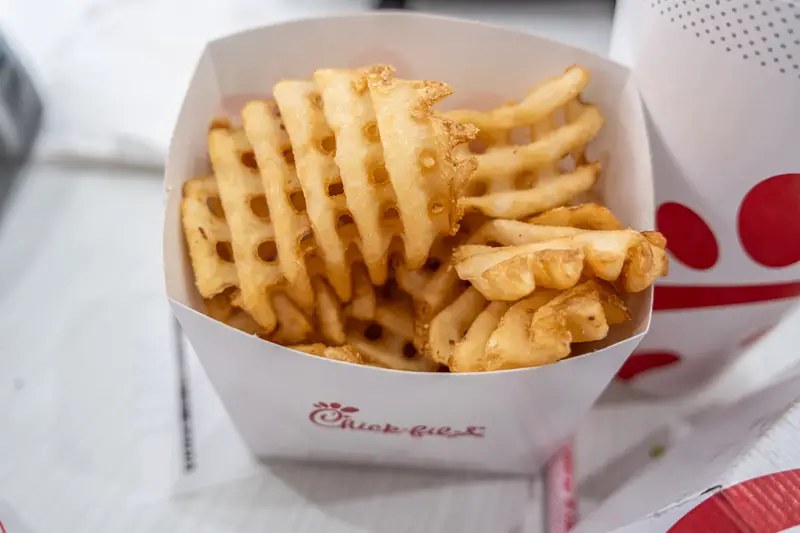
If you’ve been eating at Chick-fil-A regularly, there’s a decent chance you had a weird moment sometime in late 2024 or early 2025. You grabbed your waffle fries, took a bite, and thought — something’s off. Maybe the flavor was flat. Maybe the texture was wrong. Maybe you couldn’t put your finger on it, but the fries just weren’t hitting the way they used to.
You weren’t imagining things. Chick-fil-A had changed the recipe for its most popular menu item, and the fallout was spectacular. Here’s the full story of what happened, why people were so mad, and where things stand now.
The Waffle Fry Is Actually Chick-fil-A’s Biggest Seller
Before we get into the drama, it helps to understand just how important waffle fries are to Chick-fil-A’s identity. They’ve been on the menu since 1985 — nearly 40 years — and they’re not just a popular side. They’re the number one selling item on the entire menu. Not the Original Chicken Sandwich. Not the nuggets. The waffle fries.
Chick-fil-A sources all of the potatoes for its waffle fries and hash browns from Washington and Oregon — specifically from farms in the Columbia River Basin. We’re talking hundreds of millions of potatoes every year. The whole process from farm to fry takes about 115 days. The potatoes are grown, harvested, processed, cut into that signature waffle shape, frozen, bagged, and shipped to over 2,400 locations across the country.
When you mess with something that deeply embedded in a brand, people are going to notice. And they did.
What Chick-fil-A Actually Changed
In late 2024, Chick-fil-A added pea starch to the coating on its waffle fries. The company said the tweak was meant to keep the fries crispier for longer — a common complaint with fast food fries in general, and waffle fries in particular, since their shape and thickness means they can go soft pretty fast.
On paper, it made sense. Pea starch is a fine powder made from ground dried peas. It’s gluten-free, largely flavorless, and commonly used in the food industry to add crispiness, chewiness, and stability to fried foods. A spokesperson told reporters that the change had actually been tested for over a year before the full rollout, and that customers would enjoy the “same great taste” with better texture.
Customers did not agree.
The Backlash Was Immediate and Brutal
The complaints started pouring in almost instantly. On Reddit, customers described the new fries as “flavorless… like pale cardboard” and “rock hard and inedible.” One person wrote, “It was like they zapped the flavor out of them.” Another said the pea starch gave the fries “a much more noticeable earthy taste” that made them “taste somewhat stale or like they got dropped into a bit of dust on the floor.”
On Instagram, the comments under Chick-fil-A’s own posts turned hostile. “These new fries are terrible. Why?” one person wrote. “I stopped going because of the nasty tasting fries. Please bring back the original fries,” said another. People weren’t just disappointed — they were angry.
The general consensus was clear: sure, the fries stayed crispier longer, but at what cost? The flavor was muted. The salt didn’t stick right. And once they cooled down, they were somehow worse than the old version ever was. “They do not hold up well as they get cold,” one Reddit user noted. Someone else wrote: “They ruined the waffle fries.”
Some customers even said they’d prefer soggy fries to flavorless crispy ones. “I love soggy fries. Please, we are begging you,” an Instagram user pleaded.
The Allergy Problem Nobody Expected
Beyond the taste complaints, the pea starch addition created an unexpected problem for people with food allergies. Peas are legumes — the same family that includes peanuts. And while pea starch isn’t classified as a major allergen by the FDA, there’s a real cross-reactivity risk for some people.
According to food safety researchers at Michigan State University’s Center for Research on Ingredient Safety, people who are allergic to peanuts or other legume-derived foods can experience allergic reactions to pea protein and pea products. This was a big deal for parents of kids with pea or peanut allergies.
One parent said their daughter’s allergy to peas meant they could no longer visit Chick-fil-A at all, citing concerns about cross-contamination. Here’s an important detail that made this extra frustrating: Chick-fil-A fries its chicken in peanut oil, but the waffle fries are cooked in canola oil. That distinction had previously made the fries a safe option for people with legume allergies. Adding pea starch to the coating wiped out that safety net.
For a chain that prides itself on customer service and family-friendliness, alienating parents of kids with allergies was probably not part of the business plan.
Why a “Flavorless” Ingredient Changed the Taste
Here’s the part that confused a lot of people: pea starch is supposed to be flavorless. It’s used in all kinds of foods precisely because it doesn’t taste like anything. So how could adding something with no taste make the fries taste worse?
The answer is texture. Food scientists have long known that the way something feels in your mouth changes how you perceive its flavor. A crunchier coating can trap salt differently or change how quickly flavor hits your tongue. The pea starch made the fries crispier, yes — but that extra-hard shell also seemed to interfere with how the seasoning distributed across each bite.
Some people on Reddit described an uneven eating experience — bites that were salty in some spots and completely bland in others. Others said the coating felt too thick, creating a barrier between the salt and the actual potato. And then there was the “earthy” taste that some detected, which may have been a subtle flavor note from the pea starch that became more noticeable when combined with the potato.
Interestingly, not everyone noticed a difference. Some customers had no idea the recipe had changed. “I’m confused, when did it change in the first place? Mine seems to have served up the same ones for years,” one person wrote. Whether that’s because their location was slower to adopt the change or because their palate just didn’t pick it up is anyone’s guess.
Chick-fil-A Reversed Course in Early 2026
After more than a year of consistent online complaints, Chick-fil-A quietly dropped the pea starch from its waffle fry recipe. The change was first reported in early March 2026, and the company confirmed it by updating the FAQ section on its website. The question “Does your Waffle Fry recipe contain Pea Starch?” now gets a simple answer: No.
The current ingredient list shows potatoes cooked in canola oil with a coating that includes modified food starches made from corn, potato, and tapioca, plus rice flour, salt, leavening agents, and seasonings. No pea flour. No pea starch. A review of the old and new ingredient lists confirmed that no new ingredients were added, either — it was a clean revert to the original recipe.
Chick-fil-A hasn’t publicly explained why it made the switch back. The company didn’t frame it as a response to criticism or an admission that the change was a mistake. It just… happened.
Customers Noticed Right Away
Just as people were quick to spot the pea starch addition, they were equally fast to notice when it disappeared. “Legitimately had CFA for lunch this week and said, hey, the fries are really good today,” one person shared online. Another wrote: “The fries sucked when they added pea starch. I started eating soup instead.” A third person added: “I think they did remove pea starch because my fries are perfectly addicting and floppy again.”
The word “floppy” doing positive work in that sentence tells you everything about what Chick-fil-A customers actually wanted. They didn’t want engineered crispiness. They wanted the fries they remembered — soft in the middle, a little floppy when they cooled down, and salty in every bite.
There was, of course, at least one person who said they’d miss the pea starch version, describing them as “so crispy.” And one Reddit user joked: “I’m gonna miss that pea starch. Said no one.”
This Isn’t the Only Change Customers Are Watching
The waffle fry saga isn’t an isolated incident. In 2024, Chick-fil-A also switched from purchasing chicken raised with “No Antibiotics Ever” to chicken raised with “No Antibiotics Important To Human Medicine” — a distinction that sounds small but represents a meaningful shift in sourcing standards. Loyal customers have noticed, and some are pushing back on that change with the same energy they brought to the fry debate.
The lesson here is pretty straightforward: when you build a brand on consistency, every change gets noticed. Chick-fil-A’s chicken sandwich recipe has supposedly stayed the same for over 50 years. The waffle fry recipe was untouched from 1985 to 2024. When you go four decades without changing something and then tweak it, you’d better be sure it’s an improvement — because your most loyal customers will be the first to tell you if it’s not.
A medium order of waffle fries runs about $3.85 depending on your location and packs 420 calories, 24 grams of fat, and 240 milligrams of sodium. Same as it was before the pea starch, same as it is now that it’s gone. The numbers didn’t change. But the taste is back to what people remember — and based on the online reaction, that’s all anyone really wanted.

