

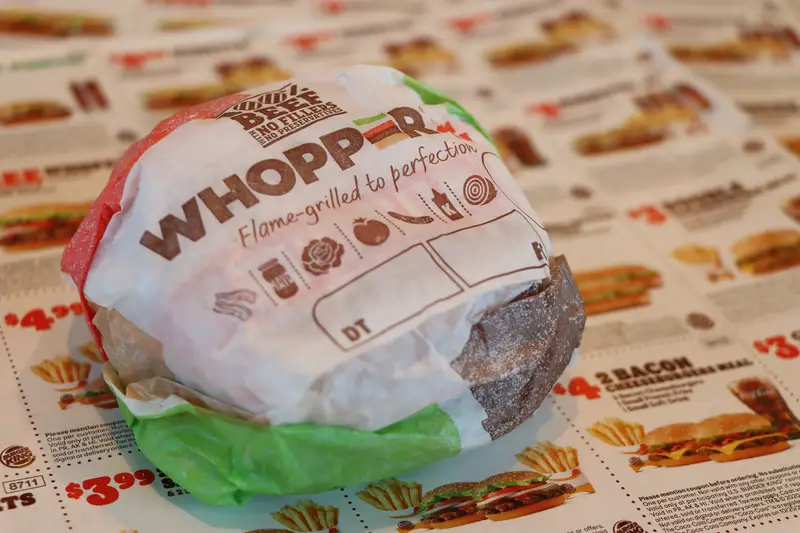
Burger King finally did something about the Whopper. After roughly a decade of customers complaining that their signature burger showed up soggy, smashed, and sad, the chain rolled out a revamped version in late February 2026. New bun. New mayo. New box. The company went big on the marketing, framing this as the moment the Whopper gets the respect it deserves. And to be fair, some of the changes are real improvements. But there’s a problem — and it’s one that no amount of creamier mayonnaise can fix.
What Actually Changed
Let’s start with what Burger King actually did. The updated Whopper features three main changes: a more premium sesame seed bun that’s supposed to be sturdier and glossier, a creamier mayonnaise with what the company describes as sweet and citrus notes, and a switch from the old paper wrapper to a clamshell box. The changes were announced on February 26, 2026, and rolled out across more than 7,000 of Burger King’s roughly 7,700 U.S. locations.
The company spent seven months testing these tweaks. Amy Alarcon, who joined as Burger King’s head chef in January 2026, led the effort. Her team even experimented with flipping the entire burger upside down — putting the beef patty on top and the veggies underneath — before deciding that was a distraction. The toppings, from onions and tomatoes to lettuce and pickles, are now stacked more carefully so the thing looks better when you open it up. And the clamshell box was designed to keep the burger fresh, retain heat, and deliver what the company calls “that melty cheese experience.”
The CEO Gave Out His Phone Number
Here’s a detail that sounds like a PR stunt but was apparently very real. Tom Curtis, president of Burger King US and Canada, gave out his personal phone number and spent four to six hours a day for two straight weeks taking customer calls. He received over 12,000 calls total. Curtis told reporters he’d been hearing for years that the Whopper was getting smushed, that the experience was declining, and that something needed to change. He compared the update to putting the Whopper “in a tuxedo instead of a leisure suit.”
One interesting thing that came out of those 12,000 calls? A lot of people weren’t even calling about the Whopper. They were calling about the French fries. No word yet on whether BK plans to do anything about that, but it tells you something about where the brand stands with its customers right now.
The Reviews Are Lukewarm at Best
So here’s where it gets interesting. Burger King made a big deal about these changes. The marketing push was loud — TikTok, Instagram, the CEO’s phone stunt. Burger King’s CEO even posted a video of himself eating the new Whopper, which was widely seen as a jab at a viral clip of McDonald’s CEO awkwardly tasting the Big Arch. But when actual people started eating the thing and writing about it, the reactions were… fine. Just fine.
One food reviewer described the new bun as “the most noticeable change” — glossier, slightly moister, more premium-looking. But when it came to the mayo, they wrote they couldn’t really tell the difference, noting it was “a subtle change at best.” Another review team was even more blunt, calling the mayo change “completely unnoticeable” and speculating that maybe their location had run out of the new stuff and used the old mayo instead. Their overall verdict? The Whopper hasn’t changed enough to make anyone who wasn’t already a fan care.
The bun upgrade got better marks across the board, though even fans of the change admitted it’s the kind of thing you probably wouldn’t notice unless someone told you about it. The clamshell box, surprisingly, drew the most consistent praise — it actually does seem to keep the burger from getting crushed, which was the number one complaint in the first place.
The One Major Problem Nobody Can Ignore
And now we get to the real issue. The Whopper costs too much for what it is.
Burger King’s website lists the Whopper at $6.79. But that’s the corporate-suggested price. In reality, depending on your market, you could be paying closer to $7.99 — or even around $8 in some areas. A Double Whopper runs $9.19. A Triple? $11.69. And those are just the standalone sandwiches, not combos. Combos run between $9.99 and $10.49.
In a world where fast food prices have been climbing relentlessly for years, paying eight bucks for a single Whopper — even an improved one — is a tough sell. One reviewer put it perfectly: “In 2026, being just good isn’t enough anymore.” The Whopper tastes fine. It’s nostalgic. It hits in a familiar, fast-food kind of way. But at this price point, it’s competing with smash burgers from Shake Shack, loaded doubles from Wendy’s, and regional chains that are running circles around the big guys on quality. A slightly better bun and marginally creamier mayo don’t bridge that gap.
Franchisees Are Stuck in a Tough Spot
The upgraded Whopper costs each Burger King franchisee about $4,000 more per year to produce. That covers the better bun, the new mayo, and the clamshell boxes. Corporate has told franchise owners not to raise prices — they’ve been very clear about that, given how inflation-weary consumers are right now. The message is essentially: absorb the cost and trust that better burgers will drive more traffic.
That sounds reasonable until you look at the math. The average Burger King franchisee earned about $205,000 in EBITDA in 2024, according to data from parent company Restaurant Brands International. That number was flat from 2023, though it was up 46% from $140,000 in 2022. An extra $4,000 on top of existing costs isn’t catastrophic, but for franchisees already stretched thin — and there are plenty of those — it adds up. And if the upgrades don’t actually move the needle on sales, that’s $4,000 straight off the bottom line with nothing to show for it.
Burger King’s Bigger Identity Crisis
The Whopper redesign doesn’t exist in a vacuum. Burger King has been struggling for years. The company itself admits it “lost its way” around 2023, with complaints about outdated stores, cold food, and an overall lackluster experience. In the 2025 QSR rankings, McDonald’s led the burger category by a wide margin, and Wendy’s was ahead of BK in U.S. sales. Burger King is currently the eighth largest fast-food chain in the country by sales, which is not exactly where you want to be when your name is literally on the word “king.”
The company has been executing a turnaround strategy called “Reclaim the Flame,” and there are some signs of life. U.S. same-store sales rose 3.2% in the most recent quarter, and transaction velocity between Burger King locations jumped 71% from 2023 to 2024. System-wide U.S. sales hit $10.98 billion across 6,701 locations in 2024. But growth was just 0.2% year-over-year — barely keeping pace.
The Whopper update is supposed to be part of this comeback story. And to Burger King’s credit, the changes they made aren’t bad. The clamshell box is a genuine improvement. The bun is slightly better. The mayo… well, the jury’s still out on whether anyone can actually taste the difference. But none of this changes the core tension: the Whopper is now a $6-to-$8 burger that tastes like a $5 burger in nicer packaging.
The Fan Base Is Split Right Down the Middle
Online reactions have been exactly as chaotic as you’d expect. Some people are thrilled. One post on X said: “Love that they’re finally giving the Whopper some love after all these years. Better bun, creamier mayo, and no more smashed burgers in the box. Sign me up.” A Reddit user called the changes a pleasant surprise.
But a lot of longtime Whopper fans aren’t buying it. The most common pushback boils down to a simple idea: don’t mess with something that’s worked since 1957. People are suspicious of change, especially when it comes to fast food they’ve been eating their entire lives. The original Whopper wasn’t broken — it was just being poorly executed at the store level. A better training program and some quality control might have solved the problem without touching the recipe at all.
Good Enough Isn’t Good Enough Anymore
The fundamental challenge facing Burger King isn’t the bun or the mayo or the box. It’s that the entire fast-food market has shifted. Consumers in 2026 are paying sit-down restaurant prices for drive-thru food, and they know it. They’re angry about it. Every dollar spent at a fast-food window now comes with an internal negotiation — is this really worth it?
For the Whopper to justify its current price tag, it needs to be more than a marginal improvement over the old version. It needs to be genuinely competitive with everything else you could spend $8 on. And right now, based on what reviewers and customers are saying, it’s not quite there. It’s better than it was. It looks nicer. It arrives in one piece. But “better than before” and “worth the price” are two very different things.
Burger King made the right call by listening to customers and taking action. That part is hard to argue with. But the changes feel incremental when the moment called for something bigger. A slightly better version of a burger people were already lukewarm on isn’t a comeback — it’s a holding pattern.

